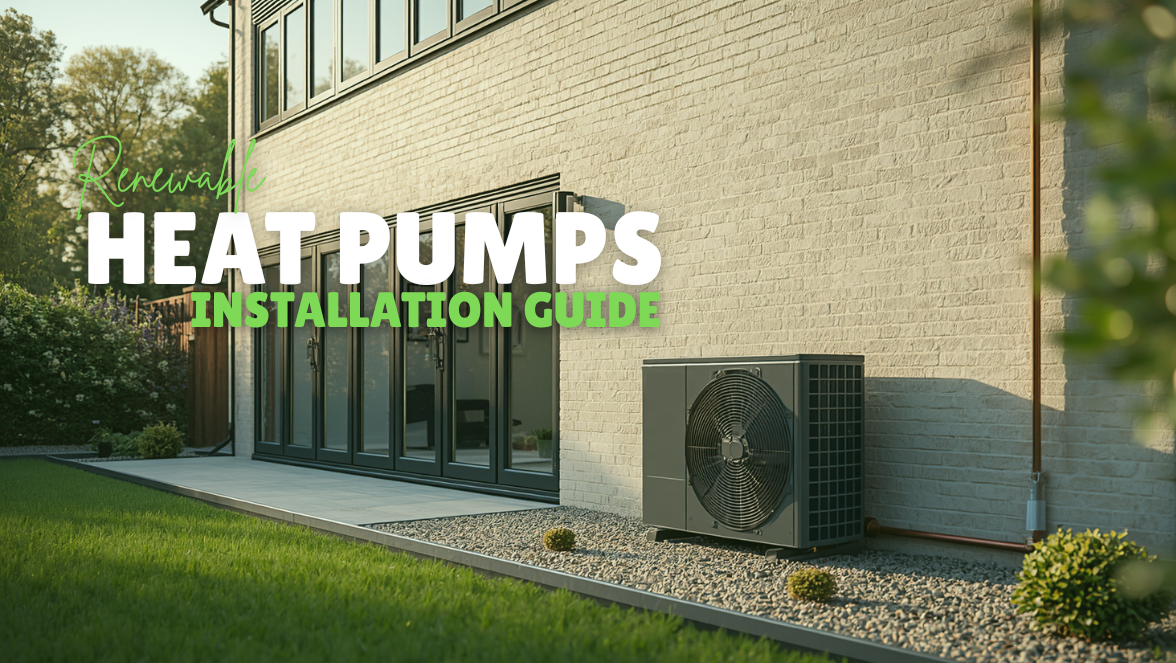
Renewable Heat Pump Installation Guide (UK)
If you’re researching renewable heat pump installation, you’re likely trying to understand how the process works and what’s involved before making a decision.
From initial assessment to final setup, installation is not just about fitting equipment. It is about designing a system that works efficiently for your property, your usage, and the UK climate.
This guide walks you through the full process step by step, including what to expect, how long it takes, and whether permissions may apply.
Quick Timeline Overview
- Survey & Assessment: 1–2 weeks
- System Design & Planning: 1 week
- Installation Work: 2–5 days (typical air source)
- Full Process: 2–4 weeks
These are typical estimates and may vary depending on the property and system complexity.
Do You Need Planning Permission?
In many cases, heat pump installations in the UK fall under permitted development, meaning planning permission is not required.
However, this depends on factors such as:
- Property type (e.g. flats or listed buildings)
- Location (e.g. conservation areas)
- Noise and positioning requirements
- Size and placement of the unit
It is always advisable to confirm with your local authority or installer, as requirements can vary.
Step-by-Step Renewable Heat Pump Installation Process
Installation Summary Table
| Step | Stage | What Happens |
|---|---|---|
| 1 | Survey & Assessment | Property evaluation |
| 2 | System Design | Sizing and planning |
| 3 | Pre-Installation Prep | Upgrades and setup |
| 4 | Installation | System installed |
| 5 | Testing & Commissioning | Performance checks |
| 6 | Handover | User guidance |
1. Initial Survey and Property Assessment
This is the most important stage of the process.
What Happens:
- Heat loss calculation
- Insulation assessment
- Review of current heating system
- Property layout evaluation
The aim is to determine whether your home is suitable and what system is required.
2. System Design and Renewable Heating Planning
Once suitability is confirmed, the system is designed specifically for your property.
Key Considerations:
- Correct system sizing
- Flow temperature optimisation
- Renewable efficiency targets
- Integration with radiators or underfloor heating
- Hot water demand
A well-designed system ensures long-term efficiency and lower running costs.
3. What Happens Before Installation Day?
Preparation ensures a smooth installation.
This May Include:
- Ordering equipment
- Scheduling installation
- Preparing access areas
- Planning electrical connections
In some cases, upgrades such as insulation or radiator changes may be recommended.
4. Installing the Outdoor and Indoor Components
Outdoor Unit Installation
- Positioned outside for airflow
- Installed on a base or wall mount
- Located to minimise noise impact
Indoor System Setup
- Hot water cylinder installation
- Control systems setup
- Integration with existing heating
5. Pipework, Electrics, and System Integration
This stage connects everything together.
Key Tasks:
- Pipework installation
- Electrical wiring
- Thermostat and control setup
- Integration with heating distribution
This ensures the system runs safely and efficiently.
6. Insulation and System Optimisation (If Required)
Some properties may require improvements to achieve the best results.
Common Upgrades:
- Improved insulation
- Larger radiators
- Underfloor heating
These upgrades help maximise efficiency and reduce running costs.
7. Testing and Commissioning
Before the system is handed over, it is fully tested.
Checks Include:
- System performance
- Temperature control
- Efficiency optimisation
- Safety compliance
Adjustments are made to ensure everything runs correctly.
8. Handover and User Guidance
You will be shown how to use your system effectively.
This Includes:
- Control settings
- Best usage practices
- Maintenance advice
This step is essential for long-term performance.
What Affects Installation Time and Complexity?
Not all installations are the same.
Key Factors:
- Property size
- Insulation condition
- System type (air vs ground source)
- Layout complexity
- Required upgrades
More complex systems naturally take longer.
Common Mistakes and Delays to Avoid
- Skipping proper system design
- Choosing based on price alone
- Ignoring insulation requirements
- Not planning installation access
A well-planned approach avoids most issues.
Get a Tailored Installation Plan
Every property is different, which means installation should always be tailored.
👉 Request a personalised quote here:
https://renewheatpump.co.uk/qoute/
👉 Or speak directly with an expert for guidance:
https://renewheatpump.co.uk/contactus/
This helps you move from general information to a clear installation plan.
Final Thoughts
The renewable heat pump installation process is structured, but it depends heavily on your property and system design.
When done correctly, it delivers efficient, reliable, and sustainable heating for years to come. The key is proper planning, accurate system sizing, and professional installation.
FAQ Section
Do you need planning permission for a heat pump?
In many cases, no. Most installations fall under permitted development, but some properties may require approval.
How long does installation take?
Typically 2 to 5 days for installation, with the full process taking a few weeks including planning.
Is installation disruptive?
There may be some disruption, but it is usually short-term and manageable.
Can renewable heat pumps be installed in older homes?
Yes, but insulation upgrades may be needed for best performance.
Do I need to replace my radiators?
In some cases, yes, especially if your current system is not suitable for low-temperature heating.
Leave a Reply