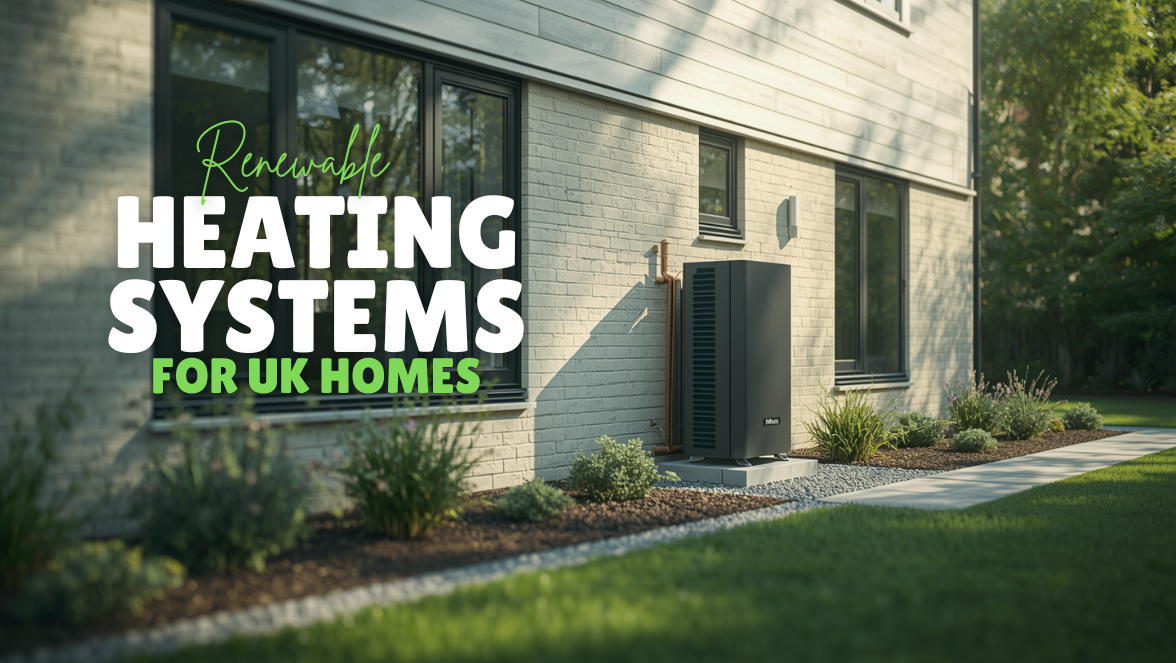
Renewable Heating Systems for UK Homes
More homeowners are now researching renewable heating UK options because heating is no longer just about replacing an old boiler. It is about future-proofing the home, reducing emissions, and choosing a system that makes sense in real UK conditions. Energy Saving Trust says heat pumps are suitable for almost all types of home, while government guidance now offers a public checker to help households assess whether a heat pump could suit their property.
What is renewable heating? Renewable heating means using systems that draw heat from renewable or naturally replenished sources, such as the air, ground, or sun, instead of relying only on burning gas or oil. In UK homes, this usually means heat pumps and, in some cases, solar thermal systems that support hot water.
Renewable heating UK. What it means for homeowners
In simple terms, renewable heating is a cleaner way to heat your home. Instead of creating heat by burning fossil fuels inside a boiler, these systems capture energy that already exists in the environment and turn it into usable heating or hot water. For most UK households, the main technologies worth understanding are air source heat pumps, ground source heat pumps, and solar water heating systems.
That does not mean every system does the same job. Heat pumps are primarily used for space heating and hot water, while solar thermal is usually better understood as a hot-water support technology rather than a full replacement for your home heating system. Energy Saving Trust notes that solar water heating is normally used alongside another heating source because solar energy varies throughout the year.
What is renewable heating?
For a beginner, the easiest definition is this. Renewable heating is any home-heating approach that uses energy from naturally replenished sources such as outdoor air, the ground, or sunlight. In a UK domestic setting, that usually means a heat pump system that extracts heat from the air or ground, or a solar heating system that uses the sun to warm water stored in a cylinder.
The reason this matters is that renewable heating is different from the older model of home heating. A gas or oil boiler burns fuel to make heat. A heat pump transfers and upgrades heat that already exists outside. GOV.UK describes heat pumps as highly efficient electric appliances that transfer and intensify heat from the air or ground into a building, and says they can produce around three units of heat for every unit of electricity they use.
The main types of renewable heating systems for UK homes
Air source heat pumps
Air source heat pumps are the most common type of domestic heat pump in the UK. They take heat from the outside air and transfer it into the water used by your central heating system. That heat can then be used through radiators or underfloor heating, and also for hot water stored in a cylinder. Energy Saving Trust says they are suitable for most types of home and are the most common option for domestic installation.
For many homeowners, this is the most practical entry point into renewable heating for homes because the system is widely available, relatively compact, and easier to install than a ground source system. Air source heat pumps are also the option most people mean when they talk about switching away from a gas boiler.
Ground source heat pumps
Ground source heat pumps work on the same basic principle, but they collect heat from the ground rather than the air. Pipework is buried underground, and the system draws in heat that is then upgraded and delivered into the home’s heating circuit. Energy Saving Trust notes that this is a low-carbon system that can reduce energy use and improve your carbon footprint, but installation tends to be more involved because of the groundwork required.
In practice, this often makes ground source more attractive where there is enough land, where a major renovation is already planned, or where the property owner is thinking long term and has the space to accommodate ground loops or boreholes. It can be an excellent option, but it is usually not the most straightforward first step for the average suburban property.
Solar-supported heating
Solar-supported heating in UK homes usually means solar water heating, also called solar thermal. These systems use collectors on the roof to absorb solar energy and heat water in a cylinder or thermal store. Energy Saving Trust says they are normally used alongside a boiler or immersion heater because solar energy varies during the year, which makes them better suited to hot-water support than full standalone home heating.
That is an important distinction. Solar thermal can be useful, but it does not usually replace the whole heating system in the way a heat pump can. It is better seen as a supporting technology within a wider sustainable home heating approach. Energy Saving Trust also notes that solar water heating generally needs around five square metres of panels in a sunny location, ideally on a south-facing roof, and extra space for a suitable hot water cylinder.
How renewable heating differs from gas or oil heating
The biggest difference is where the heat comes from. Traditional gas or oil systems burn fuel to create heat directly. Renewable systems, especially heat pumps, work by moving and concentrating heat from the environment. That is why they are often described as low-carbon heating UK options rather than simply new versions of an old boiler.
This also changes how the system behaves in day-to-day life. Heat pumps usually work best with steady, efficient operation and lower flow temperatures, whereas boilers are built around combustion and higher-temperature heat. Solar thermal systems work differently again, because they mainly top up your hot water using sunlight and usually need another system behind them.
Comparison table. Which system suits which home?
| System type | Best use case | Main strength | Main consideration |
|---|---|---|---|
| Air source heat pump | Most UK homes looking to move away from gas or oil | Widely suitable, lower-carbon heating, common domestic option | Needs correct design and often a hot water cylinder |
| Ground source heat pump | Homes with space and long-term renovation plans | Stable low-carbon heating from the ground | Higher installation complexity and more groundwork |
| Solar water heating | Homes wanting to support hot water with solar energy | Useful for hot water and lower emissions | Usually needs another heating source and a cylinder |
This is a simplified comparison, but it reflects the current UK homeowner picture. Air source heat pumps are usually the main route for full-home clean heating solutions, while solar thermal is better understood as a supporting technology.
Why more UK homeowners are considering renewable heating systems
There are a few reasons this subject has moved from niche to mainstream.
First, these systems are far more visible than they used to be. Energy Saving Trust says heat pumps are suitable for almost all types of home, and government tools now actively help people check home suitability. Second, heat pumps are highly efficient, with GOV.UK stating they can deliver around three units of heat per unit of electricity used. Third, many households are looking at alternatives to gas boilers that fit where home heating is heading in the UK.
There is also a practical reason. Renewable heating is not just about environmental values. It is about choosing an energy-efficient home heating system that can make sense over the life of the property, especially where the home is being upgraded, extended, or rethought as part of a longer-term plan.
Benefits of renewable heating for homes
The main benefits are clear, but they need to be explained honestly.
1. Better efficiency
Heat pumps are efficient because they transfer heat rather than generate it by burning fuel. GOV.UK says they can produce around three units of heat for each unit of electricity used, and Energy Saving Trust describes them as energy-efficient, low-carbon systems.
2. Lower emissions
Renewable systems, especially heat pumps, are a lower-carbon option than fossil-fuel heating. Energy Saving Trust explicitly describes heat pumps as low-carbon heating, and government consumer guidance groups heat pumps and solar technologies among products that can reduce a home’s carbon footprint.
3. Stronger future-readiness
For many households, renewable heating is about not locking the home into old systems for another decade or more. Whether the priority is emissions, modernisation, or long-term system planning, heat pumps UK are increasingly central to that conversation.
4. Potential long-term savings
This needs a balanced explanation. Savings depend on what system you are replacing, how well the home is designed, your electricity tariff, and how the new system is controlled. Energy Saving Trust says heat pump running costs vary and that savings depend on what heating system you are replacing. So yes, there can be long-term value, but not every home will see the same result.
Practical things homeowners should understand before installing
This is where a lot of generic articles go vague. The reality is that renewable heating works best when the whole property is considered, not just the appliance.
Energy Saving Trust says air source heat pumps are suitable for most homes, and a later article says heat pumps are suitable for all property types, including flats and terraced houses, although older homes can present more design challenges. At the same time, the government clean energy campaign says most UK homes are suitable, but the best option depends on space and layout, and improving insulation and draught-proofing can help lower running costs.
That means the sensible questions are:
- Is the home suitable in terms of layout and space?
- Is the insulation reasonable, or does it need improvement?
- Will the system work well with existing radiators or would upgrades help?
- Is there room for a hot water cylinder?
- Does the property suit air source, ground source, or solar support best?
This is also why upfront cost should never be looked at in isolation. Ground source systems can involve substantial groundwork, solar thermal needs roof space and cylinder compatibility, and air source systems still need careful design. A property-specific review matters more than a headline price.
If you are already at the stage of comparing options for your home, you can request a tailored quote to understand what type of system is likely to fit your property best.
Where renewable heating works especially well
Renewable heating can work in most UK homes, but it often works especially well where homeowners are already thinking system-wide. That may be during a renovation, an extension, a heating-system replacement, or when the property already has or can accommodate larger radiators, underfloor heating, or a hot water cylinder. Energy Saving Trust and GOV.UK both emphasise that suitability is broad, but design still matters.
Solar-supported heating works particularly well where there is a good sunny roof position and a household with steady hot-water demand. Energy Saving Trust notes that solar thermal systems are especially useful for heating water, rather than fully heating most homes on their own.
Quick summary for skim readers
Here is the short version:
- Renewable heating UK usually means heat pumps and, in some homes, solar thermal.
- Air source heat pumps are the most common domestic option.
- Ground source heat pumps can work very well, but need more space and installation work.
- Solar thermal is usually a hot-water support system, not a full home-heating replacement.
- Most UK homes can be suitable, but layout, insulation, and overall design still matter.
- The best choice depends on the property, not just the technology.
If you are unsure which route fits your home, it is usually better to get advice before narrowing yourself to one technology. You can contact the team here to discuss suitability, layout, and what a sensible next step would look like.
FAQ
What is renewable heating?
Renewable heating means using systems that capture energy from renewable or naturally replenished sources, such as outdoor air, the ground, or sunlight, instead of relying only on burning fossil fuels. In UK homes, that usually means heat pumps or solar water heating.
Are heat pumps suitable for UK homes?
Yes, in most cases. Energy Saving Trust says heat pumps are suitable for almost all types of home, and later guidance says all property types can be suitable, including flats and terraced houses, although older homes may require more careful design.
Is solar heating enough to heat a whole house?
Usually not on its own in the UK, at least not in the normal domestic solar thermal sense. Energy Saving Trust says solar water heating is generally used alongside a boiler or immersion heater because solar energy varies throughout the year.
What is the difference between renewable heating and a boiler?
A boiler burns fuel to create heat. Renewable heating systems, especially heat pumps, transfer heat from the air or ground into the home. That is why they are seen as more energy-efficient and lower-carbon in many situations.
Do I need good insulation for renewable heating?
Good insulation and draught-proofing are always helpful because they reduce heat loss and can improve running costs. Government guidance says most UK homes are suitable for heat pumps, but improving insulation can still help the system perform better.
Conclusion
For most homeowners, renewable heating UK is not about chasing trends. It is about understanding which heating system makes practical sense for the property, the budget, and the long term. Heat pumps are now the main conversation for full-home low-carbon heating, while solar-supported systems can play a useful supporting role for hot water. The strongest decisions come from balancing efficiency, property suitability, installation reality, and future plans rather than looking for a one-size-fits-all answer.
Leave a Reply