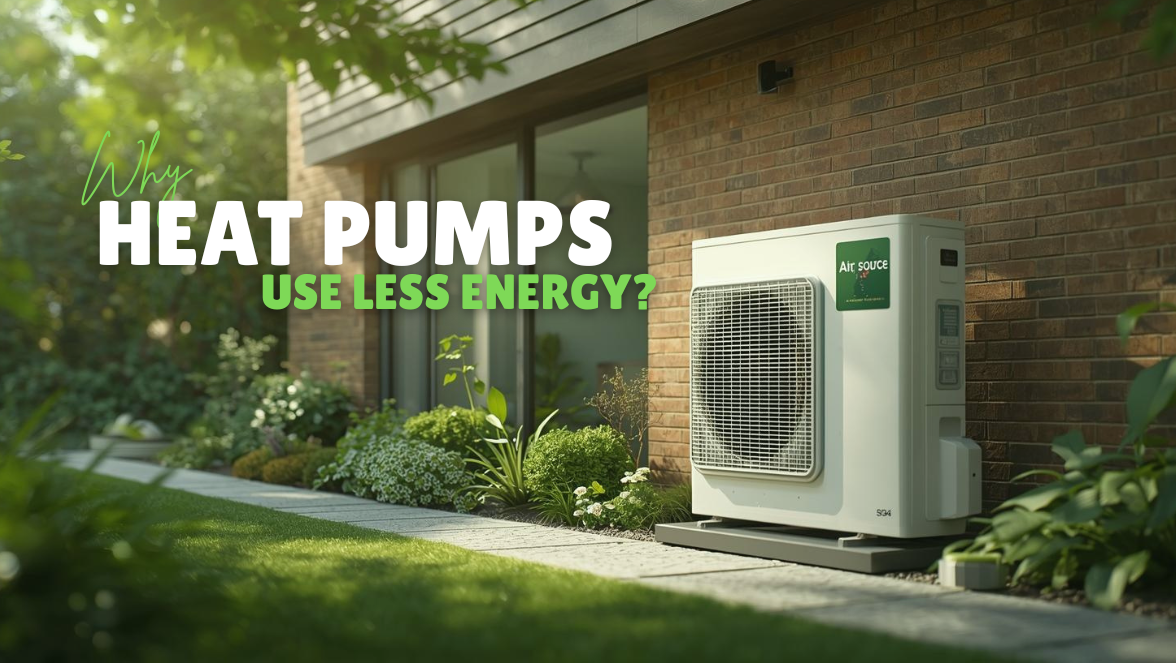
Why Heat Pumps Use Less Energy ?
Introduction
Heating your home is usually the largest part of your energy bill. In fact, according to the Energy Saving Trust, heating and hot water account for over 60 percent of energy use in a typical UK household.
That is why many homeowners are now asking a very important question. How do heat pumps save energy compared with traditional heating systems?
Here is the key insight. Instead of producing heat by burning fuel, heat pumps transfer heat from the outside environment into your home. This process requires far less electricity than generating heat directly.
The result is impressive. Modern heat pumps can operate at 300–400 percent efficiency, making them one of the most energy efficient home heating technologies available today.
If you are exploring ways to reduce energy bills, cut carbon emissions, or upgrade to a renewable heating system, understanding how heat pumps work is the first step. This guide explains the technology, the potential savings, and how to estimate whether a heat pump could work for your property.
What Is a Heat Pump and How Does It Work?
A heat pump is a renewable heating technology that captures heat from the environment and moves it indoors to warm your home.
Rather than burning gas or oil, heat pumps rely on electricity to transfer existing heat energy. This process is much more efficient than combustion-based heating.
Most UK properties install air source heat pumps, which absorb heat from outside air even when temperatures are low.
Here is a simplified breakdown of how heat pumps work:
- The outdoor unit pulls in heat from the surrounding air.
- A refrigerant absorbs this heat and turns into gas.
- A compressor increases the temperature of that gas.
- The heat is then transferred into your home’s heating system.
Because the system moves heat instead of generating it, heat pump efficiency is significantly higher than traditional heating systems.
This is the fundamental reason heat pumps reduce energy consumption.
How Do Heat Pumps Save Energy Compared to Traditional Heating?
To understand how do heat pumps save energy, it helps to compare them with common heating technologies used in UK homes.
Traditional heating systems convert fuel into heat. During this process, some energy is always lost.
Heat pumps work differently. They use electricity to move heat rather than create it, which allows them to produce more heat energy than the electricity they consume.
Let us explore how this works in practice.
COP (Coefficient of Performance) Explained Simply
One of the most important measures of heat pump efficiency is the Coefficient of Performance (COP).
COP describes how much heat a system produces compared with the electricity it uses.
For example:
- COP of 1 means 1 unit of electricity produces 1 unit of heat
- COP of 3 means 1 unit of electricity produces 3 units of heat
Most modern air source heat pumps operate with COP values between 3 and 4.
That means a heat pump can generate three to four times more heat than the electricity it consumes.
According to the International Energy Agency, heat pumps can reduce electricity consumption for heating by up to 50 percent compared with traditional electric resistance heating systems.
This high performance is the primary reason heat pumps are considered energy efficient home heating systems.
Heat Pumps vs Gas Boilers: Energy Comparison
Gas boilers have been the standard heating system in UK homes for decades. However, their efficiency is limited by combustion.
Even modern condensing boilers typically achieve 85–92 percent efficiency.
Heat pumps, on the other hand, can exceed 300 percent efficiency because they transfer heat rather than produce it.
This difference leads to several benefits:
Lower overall energy use
Heat pumps need less energy input to produce the same heating output.
Reduced carbon emissions
Because electricity in the UK is increasingly generated from renewable sources, heat pumps support lower household emissions.
Future-ready heating
As the UK transitions toward electrified heating systems, heat pumps are expected to become more common.
According to the Energy Saving Trust, switching from a gas boiler to a heat pump can reduce carbon emissions by around 1.6 tonnes of CO₂ each year for a typical household.
Heat Pumps vs Electric Radiators: Which Saves More?
Electric radiators are easy to install but often expensive to run.
Electric resistance heating operates at 100 percent efficiency, meaning every unit of electricity becomes heat.
While this may sound efficient, heat pumps are still far more effective.
For example:
- Electric heater: 1 kWh electricity produces 1 kWh heat
- Heat pump: 1 kWh electricity produces 3–4 kWh heat
Because of this difference, heat pumps can significantly reduce electricity consumption in homes currently using electric heating systems.
This is why air source heat pump savings can be particularly noticeable when replacing electric radiators or storage heaters.
How Much Energy Can a Heat Pump Actually Save?
The level of heat pump energy savings varies depending on several factors, including the heating system being replaced, the home’s insulation, and energy prices.
However, there are useful benchmarks based on UK studies.
According to the Energy Saving Trust, potential savings include:
Replacing electric heating systems
Savings of £700–£1,500 annually
Replacing oil or LPG heating
Savings of £300–£800 per year
Replacing gas boilers
Savings vary depending on energy tariffs, but energy consumption still decreases.
In many cases, homeowners see 30–50 percent reductions in heating energy usage.
Additionally, government incentives such as the Boiler Upgrade Scheme grant of £7,500 help reduce installation costs.
If you want to estimate potential savings for your home, you can try our free heat pump savings calculator here:
https://heatpumpworks.co.uk/calculator/
The calculator provides a quick estimate based on your current heating system and household energy use.
What Factors Affect Heat Pump Energy Savings?
Although heat pumps are efficient, their performance depends on several important factors.
Understanding these elements helps maximise heat pump efficiency and long-term savings.
Home Insulation
Insulation is one of the biggest influences on heating efficiency.
Homes with proper insulation retain heat longer, allowing heat pumps to operate more efficiently.
Loft insulation, cavity wall insulation, and double glazing can all improve heat pump energy savings.
Outdoor Climate Conditions
Heat pumps extract heat from outdoor air, so temperature conditions play a role.
The good news is that the UK climate is well suited for air source heat pumps, as winters are relatively moderate.
Most modern systems operate efficiently in temperatures down to −15°C.
Proper System Design and Installation
Correct installation is essential for achieving optimal efficiency.
An undersized system may struggle to heat the property, while an oversized system may run inefficiently.
Professional installers evaluate the property’s heating requirements before recommending equipment.
If you are considering installation, the best approach is to get a free heat pump quote from qualified professionals:
https://heatpumpworks.co.uk/qoute/
This ensures the system is designed correctly for your home.
Is a Heat Pump Worth It for Your Home?
For many homeowners, switching to a heat pump offers both financial and environmental advantages.
Here are some key reasons why.
Lower long-term heating costs
Heat pumps use less energy to produce the same amount of heat.
Reduced environmental impact
Heat pumps rely on electricity rather than fossil fuels, supporting cleaner energy.
Stable future energy costs
As renewable electricity expands, heating costs may become more predictable.
However, every home is different. Property size, insulation levels, and current heating systems all influence potential savings.
To understand whether a heat pump is right for your property, it is worth speaking with specialists and getting a free heat pump quote here:
Get a Qoute
They can assess your home and recommend the most suitable system.
Use Our Heat Pump Savings Calculator
Before installing a heat pump, many homeowners want to estimate potential savings.
Our online tool helps you understand heat pump running costs in the UK compared with your current heating system.
The calculator considers:
- Current heating system type
- Home size and heating demand
- Estimated energy consumption
- Average UK energy prices
You can calculate your savings instantly using our free savings calculator here:
Calculator
This simple tool helps homeowners make informed decisions about switching to energy efficient home heating.
Frequently Asked Questions
Do heat pumps really save money?
Yes. Heat pumps can significantly reduce heating energy consumption because they transfer heat rather than generate it. Many households experience 30–50 percent lower energy use compared with older systems.
How much can a heat pump reduce my energy bill?
Savings vary depending on the heating system being replaced. Homes switching from electric heating can save hundreds to more than £1,000 per year.
Are heat pumps efficient in cold weather?
Yes. Modern heat pumps operate efficiently in temperatures as low as −15°C, making them suitable for UK winters.
How long does it take for a heat pump to pay for itself?
The typical payback period ranges from 7 to 12 years, depending on installation cost, government incentives, and energy savings.
What is the most energy-efficient type of heat pump?
Ground source heat pumps typically achieve the highest efficiency. However, air source heat pumps provide strong efficiency with lower installation costs, making them the most common option in the UK.
Conclusion
Heat pumps save energy by transferring heat rather than producing it through combustion. This allows them to deliver several units of heat for every unit of electricity used, resulting in significantly higher efficiency than traditional heating systems.
For homeowners looking to reduce energy consumption, cut heating costs, and adopt cleaner technology, heat pumps offer a powerful solution.
To explore potential savings, start by using the heat pump savings calculator here:
Calculator
Then take the next step and get a free heat pump quote from experienced installers who can assess your home and recommend the best system:
Get a Qoute
Leave a Reply